AA Tex Lawn Company

AA Tex Lawn Company
Nature Inspired. Service Driven.

Thursday, July 14, 2011

Playground Mulch: How Safe Are Your Children?


When you are young, imagination is a wonderful thing.  Slides aren’t simply slides, they are mountains to be scaled or to rappel; swings are not just swings, they are planes that fly you to the sky so that you can parachute down to earth.  Even the parents of the tamest kids will eventually find them scaling the outside of the playground equipment.  It’s inevitable.   But as the mind dreams up these wonderful adventures, sometimes the body is unable to carry them out and pays the price.  So as parents, what can we do to keep our kids safe on their playground adventures?

The Blue Max website says that on average, more than 200,000 children are treated in US Emergency Rooms for playground injuries.  Don’t get me wrong.  I’m not saying we should stop kids from playing.  With childhood obesity rates on the rise in the United States, it is more important than ever to get our kids outside and away from “screen time”.  However something as simple as mulch can do much to help prevent and reduce injuries incurred from falls from playground equipment.

While most public parks and playgrounds have equipment installed over some sort of mulch, the majority of residential backyard playgrounds are installed over grass and dirt.  There are a variety of playground surface options available.  Anything from sand to mulch to rubber products all provide some level of protection from critical falls.  We recommend and install Tumblesafe Playground Mulch.  This is an engineered wood fiber that is 100% natural.  It is cut at an angle to prevent sharp points and helps absorb the impact from a fall from playground equipment.  We feel it is the best value for the money.  It meets and exceeds the head impact criteria set forth by the Consumer Product Safety Commission and is the product that state regulated daycares use.
While Tumblesafe Playground Mulch holds up well, any type of mulch can become a casualty of spring and summer storms.  If you have already installed mulch under your backyard playground, make sure the wind and rain we’ve had recently have not washed it away.  We recommend a minimum of 4-6 inches installed.  If you have not installed mulch, it is something you should consider.  My neighborhood has already seen two broken bones from playground accidents this season.  Here’s to an imaginative, but safe summer.
Thanks,
The AA Tex Lawn Team

Wednesday, July 6, 2011

July is Proclaimed Smart Irrigation Month for NC


For the second consecutive year, Governor Beverly Perdue has officially proclaimed July as "Smart Irrigation Month" for North Carolina. Water is a precious resource. With the ever-growing population and the droughts of recent years, it is even more important to make sure we are conserving where we can and getting the most of the water we are using. Here are a couple of tips to help with that:

Water at the Right Time – ideally, you will water your lawn during the hours that the lawn is wet from dew. As it is cooler, it will minimize evaporation.

Don't Overwater – different plants have different needs. One size does not fit all when it comes to irrigation. Here are some stats from savingwaternc.com: On average:

  • small shrubs need 5 gallons water/week
  • large shrubs need 10 gallons/week
  • trees need 2 gallons per inch diameter (measured at 4.5' above the ground)/week
  • flower beds need 5 gallons of water/10 sq. ft. (1 minute of water at medium pressure)
  • lawns require about 1/2-1" water per week, depending on the grass type. High-use turf areas may need more frequent irrigation.
Install a Rain Sensor – there is nothing more inefficient than a sprinkler system running in the rain. Besides manually controlling your irrigation system timing, (and who wants to schlep out in the rain to do that?) what can you do to stop your sprinklers from coming on during or after rain? Install a rain sensor. It monitors rainfall and turns your system off when Mother Nature has provided enough precipitation. There are other "smart" controller options that take into account plant requirements and local weather. We can help you know your options.

Hand Watering
– Drip systems use 50% less water than a typical sprinkler in addition to applying water directly to the root zone where it is needed. If drip irrigation is not available, use a water breaker (the attachment for your hose that acts like a shower head) on the end of your hose to deliver an even, gentle flow to the base of the plants. It's interesting to note that a typical garden hose delivers 5 gallons of water per minute. You can also use a 5-gallon bucket with small holes in the bottom to slowly water your beds and prevent run-off.

Think Ahead when Planning your Landscaping – Group plants with similar water and soil needs. Then you can use drip irrigation or zoned irrigation to most efficiently water your plants. The use of native plants, trees, and shrubs helps, too. Since these plants occur naturally in our area, they are adapted to local conditions including climate, soil, and rainfall.

Audit Your Irrigation System – Have your system audited by an irrigation tech to check for leaks, adjust the heads, and make any necessary repairs. (Make sure you're not watering the pavement!)

Even with our summer storms, most of our state has had below average rainfall this summer. If you use water-wise habits, you'll have a healthier landscape, conserve water, and reduce your water bill. Let's make every month Smart Irrigation Month! For more information on this topic, check out http://www.savingwaternc.com

Thanks,

The AA Tex Lawn Team

Wednesday, June 29, 2011

Why is Soil PH Important?


Remember those high school chemistry classes? We learned about acids, bases, and PH, elements and the periodic table. Did you ever think you'd need to know those things to take care of your grass? The health of your grass depends greatly on the components in your soil. For all grass types, a soil test should be done at least every two to three years to determine the amounts of lime, phosphorus, and potassium needed by your established lawn. This is called a PH test. Soil PH determines how efficiently your lawn will be able to absorb and use the nutrients it receives. In short, if you want healthy, lush turf, adjusting the PH is vital.
To perform this test, soil samples are taken and sent to Cooperative Extension offices. They analyze the elements in the soil to determine any nutrient deficits and the acidity of the soil so that we can more accurately tell the amount of fertilizer, lime, or other elements needed to keep your grass healthy.

Typically, North Carolina soils are found to be quite acidic because our warm, humid weather causes calcium, potassium, and magnesium to be leached from the soil. That leaves an overabundance of hydrogen and aluminum, two very acidic elements. If your soil is too acidic, it can be toxic to plants. At AA Tex Lawn, we use a product called Solu-cal which is a water-soluble calcium to neutralize the acidity of the soil. It corrects the soil PH better and faster than the lime we used in the past.

There is science behind grass. You don't need to be a chemist to grow grass, but understanding your soil is the first step in getting the lush green turf we'd all love to have. For more info on adding Solu-cal to your turf, please give us a call.

Thanks,
The AA Tex Lawn Team
Thursday, June 23, 2011

Fescue Battles the Heat

The Carolinas are a great place to live. We live in a transition zone that can support both warm and cool season grasses. While warm season grasses grow best in the summer, cool season grasses like fescue maintain a green color throughout the winter. The summer months can be tricky for fescue turf. Heat stress is one of our hardest battles we face with this turf type.

Fescue turf has an optimum growth temperature between 60 to 75 degrees. The hot temperatures of summer can cause heat stress. This is why the beautiful fescue lawn that you see in late winter/early spring may start to look spotty in summer. In fact, when temperatures reach 90 degrees and above, fescue will go dormant (meaning the grass stops growing to conserve energy until better conditions arrive). All this is completely normal for cool season turfgrasses. It is just too hot for them to grow optimally in the summer months in the south.

The problem comes with continually high temperatures. Eventually, the string of 90 plus degree weather with no break can cause roots to die back, resulting in a loss of large amounts of turf. We've already had over 20 days of weather topping out over 90 degrees this spring/summer. And it's not even July yet! What can you do to help your fescue turf fight heat stress?


  • First of all, the deeper and more established your roots are the longer your fescue can take the heat. Disease or insect infestation can damage root health, making your lawn more susceptible to heat stress. There are preventative sprays you can put on your lawn to guard against these types of issues. Soil tests are also useful to identify problems with the soil that may be hindering root growth.
  • At AA Tex Lawn, we mow fescue above 3 3/4 inches in the summer to help reduce stress. We want to avoid breaking the grass blade off at the ground, which could damage the plant.
  • Because of the hot weather we've had this year, we have moved many of our clients to a 10 day mowing schedule. This is a way to keep from overtaxing the grass that is already close to dormancy by the heat. Stressed turf does not respond well to foot or mower traffic.
  • A deep long watering can help delay heat stress, but essentially this is a temperature issue, not a water issue. With continued extreme temperatures, watering and irrigation will not overcome the excessive heat.


Remember, dormancy is normal for fescue turf. It is a survival tactic cool season turfs use to get through hot weather until prime growing conditions return. Our job as landscapers is to do what we can to help the dormant fescue recover quickly when temperatures lower. The goal is to avoid injuring the roots so that as much turf will recover as possible when the cooler weather returns in the fall. Barring any radical temperature shifts in the fall, fertilization and overseeding should help re-populate areas that are bare because of heat stress. Mother Nature likes to throw us curve-balls. Our job is to do preventative maintenance by making your lawn as healthy as it can be and fight the battle against the weather. If your lawn is a battlefield, together we'll win the war!


Wednesday, June 15, 2011

Safety and you Lawn Service


    When you think of dangerous careers, you probably think of firemen, police work, Deadliest Catch salmon fishing or race car driving. Generally speaking, landscaping is not what comes to mind. However the equipment our crews use on a daily basis can be very dangerous in the wrong situations. Did you know mower blades spin at about 200 miles per hour? The force created by those blades can make missiles out of many innocent items in the yard. All of our contracts include clauses regarding our treatment of personal items left in the areas we maintain. It's something we struggle with because we do not want to damage your property and we have to consider the safety of our workers. Here are some of the issues we face:

- Dog Chains: These are typically clear and can become projectiles when run over by a mower. It's best to put these in a natural area, garden bed, or stake them directly beside a patio and leave the chain on the patio, so that we will not hit it with our mowers and potentially damage your property or our employees. Before you mow your lawn (or someone else comes to mow it for you) pick up any items lying in the grass that may be hit with the mower. Glass patio doors are often victims of flying rocks and debris.

- Grills and Patio Furniture: The crews have been instructed to mow around these sorts of items. Trying to edge or mow too closely could potentially cause damage to your property and we wouldn't want to do that. If it is possible, the best place for these sorts of things is on a patio.

- Personal Landscaping in areas we maintain: Young, tender trees and plants are easily mistaken for weeds when they are first planted because of their size. This is especially true if they are planted in the grass without any sort of edging. If you maintain your own landscape, it is easier to remember where new plantings are and to work to protect them. If you have an outside service maintain your lawn, be sure to clearly identify new plantings to avoid them being sprayed or pulled by mistake. If you live in a community with included landscaping, as a rule, it's best to check with your HOA to verify that you have permission to plant in common areas and full-maintenance areas. When you do plant in beds or areas that we maintain, protect your investment by labeling it so that there is no confusion about what it is. We want to work with you as a team and not waste any time and effort you have invested in your landscape.

- Excessive Trash or Waste: Although not exactly a safety issue, it is important to mention. Anyone who has run over paper with their lawn mow can testify to the mess it makes in the yard as it is shredded and blown out the discharge shoot. Our crews have been instructed to mow around areas that have excessive pet waste or trash (such as cigarette butts, bottles, paper, etc.) Our high powered mowers can sling trash all over the yard. While we do pick up some trash before mowing, excessive amounts make it impractical to keep to our timeframe and ultimately effects pricing. Help us to help you by picking up after yourself and your pets.


Because safety is important to AA Tex Lawn, our employees are required to wear the appropriate safety gear, including vests and safety glasses. Our Production Manager inspects our equipment to limit exposure to danger. Morning meetings act as forums to discuss safety and training issues. Let's work together to keep your lawns lush, green, and SAFE! 

Thanks,

The AA Tex Lawn Team

Thursday, June 9, 2011

Common Problems with Fescue Turf


As we are embraced in a terrible heat wave, our lawns will begin to go downhill if this weather continues to be hot, humid, and dry. In previous newsletters we've discussed proper watering and mowing to help prepare for and battle the summer heat (if you need more info on those topics please let us know). You may know that fescue can begin to brown with this hot weather. I have some pictures to help you identify heat stress. I also have included pictures of some common problem weeds to help you understand what they are.

Heat stress - is very common in our area as most of us have fescue grass, which is a cool season turf. Fescue prefers 70 degree temps during the day and 50's at night. As we are getting blasted by 90+ temperatures fescue will start to stress and brown. We live in what is referred to as a Transition Zone, where we can host all turf types. For fescue turf, that means in spring and fall it will thrive, and in summer it will struggle. The deeper and more established your roots are the longer your fescue will remain healthy. When the first signs of heat stress show in your lawn, the only cure is to water those spots for a long period of time for a couple of days (meaning 40-45 minutes depending on grading and drainage). It will bounce back.


Early Stages of Heat Stress
Late Stages of Heat Stress


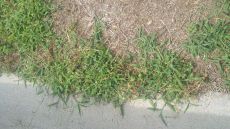
Crabgrass - is an annual summer grassy weed that is one of the worst pests in lawns for our area. A yearly pre-emergent can be applied to help prevent crabgrass, however timing of the application is vital. Pre-emergents do not last forever. These treatments degrade after a certain length of time because of two common factors from Mother Nature: sunlight and rainfall. These elements will break down the barrier created by the pre-emergent and leave your lawn susceptible again. Crabgrass has four life stages to its life-cycle. It is easiest to kill when in the first and last stages of the plants life. There are post-emergent herbicides to spray on crabgrass during the summer months. However, the best defense to prevent crabgrass and all other weeds is........DENSE, HEALTHY TURF!!!!!


Dallis Grass - is a perennial summer grassy weed. Most homeowners confuse dallis and crabgrass. They are different however and are treated differently. Pre-emergent can also work to help prevent dallis grass but as with crabgrass, if you don't have a dense healthy root structure on your turf, it will invade your lawn. Dallis grass has very dense grass blades and grows tall, whereas crabgrass typically stays lower to the ground. Unlike crabgrass, there are no post emergent herbicides for dallis grass. The best plan of attack is to spray the dallis grass with roundup in late summer and re-seed fescue in those areas to increase fescue density.


Top:  Crabgrass; Bottom - Dallis Grass
Nutsedge - is a perennial weed that grows in the summer time. It is very easy to identify as it grows much taller and faster than any other weeds around. It is the only weed that is three sided when rolled in your fingertips. Nutsedge has a bright neon green color to it. It has tubers (or nutlets) in the soil that are hard to eradicate. It grows on rhizomes, which are roots that run underneath the soil like a vine. Nutsedge prefers to grow in hot, wetter areas of the lawn. There is an herbicide that will kill the stalk of the nutsedge but will not kill the tubers. That means it can re-grow in the same spot. Our herbicide will eliminate 40-60% of the nutsedge weeds and suppress the rest.

I hope this information and the pictures are helpful. We're always more effective in handling issues if we know what we are dealing with. This does not come close to touching all the summer weeds in fescue lawns, however these are the most common and problematic weeds we encounter in our area during the summer. As a reminder we do offer a flea, ant, and tick application for summer time to rid your lawn of pests that can cause issues for kids and dogs. To receive a free analysis or to sign up for service, call our office at 704-821-0708 or visit our website at:
www.aatexlawn.com

Thanks,

The AA Tex Lawn Team

Thursday, June 2, 2011

Your Lawn, the Unsung Hero


A beautiful lawn is something which most of would love to have. What's more relaxing than walking barefoot across the grass or laying a blanket out for a picnic on the soft grass (or a nice nap), or letting the kids play in with the sprinkler without creating mud puddles in the backyard and tracking mud through the house! Yes, there are many reasons to want a lush turf around your house. Most of us don't realize the environmental benefits of grass, though. Here are several lesser known benefits to grass.
Water Quality
  • Grasses trap the rainwater to keep runoff from washing away valuable soil. It stops erosion and also keeps the soil for running into storm drains.
  • As an additional benefit, microorganisms that live in the topsoil and thatch of your turf break down impurities. They basically act as a water filter in our lawn to reduce pollution by purifying the water as it passes through the turf's root zone.
Air Quality
  • Turfgrasses produce oxygen and absorb carbon dioxide emissions, thereby helping to give us the air we need to live. 2,500 square feet of turf (that's just 0.06 of an acre) absorbs enough carbon dioxide and produces enough oxygen for a family of four to breathe.
  • They also reduce heat in urban areas where the heat from the sun bounces off concrete and asphalt raising the temperatures. This is called the "heat island effect". The Lawn Institute's website tells us that "On a hot summer day, lawns will be 30 degrees cooler than asphalt and 14 degrees cooler than bare soil." That's significant!
  • Lawns trap and remove dust and dirt from the air. Removing these pollutants improves the air we breathe.


So not only will a beautiful landscape increase curb appeal and add as much as 15% to the value of your home, it will help our environment and improve the world we live in. AA Tex Lawn has a variety of services for your turf. To Unlock Your Lawn's Potential, call our office at 704-821-0708 or see our website at www.aatexlawn.com.


Resources:
http://www.landcarenetwork.org/legislative/watertext.pdf
http://www.thelawninstitute.org/environment/?c=184513