AA Tex Lawn Company

AA Tex Lawn Company
Nature Inspired. Service Driven.

Thursday, June 23, 2011

Fescue Battles the Heat

The Carolinas are a great place to live. We live in a transition zone that can support both warm and cool season grasses. While warm season grasses grow best in the summer, cool season grasses like fescue maintain a green color throughout the winter. The summer months can be tricky for fescue turf. Heat stress is one of our hardest battles we face with this turf type.

Fescue turf has an optimum growth temperature between 60 to 75 degrees. The hot temperatures of summer can cause heat stress. This is why the beautiful fescue lawn that you see in late winter/early spring may start to look spotty in summer. In fact, when temperatures reach 90 degrees and above, fescue will go dormant (meaning the grass stops growing to conserve energy until better conditions arrive). All this is completely normal for cool season turfgrasses. It is just too hot for them to grow optimally in the summer months in the south.

The problem comes with continually high temperatures. Eventually, the string of 90 plus degree weather with no break can cause roots to die back, resulting in a loss of large amounts of turf. We've already had over 20 days of weather topping out over 90 degrees this spring/summer. And it's not even July yet! What can you do to help your fescue turf fight heat stress?


  • First of all, the deeper and more established your roots are the longer your fescue can take the heat. Disease or insect infestation can damage root health, making your lawn more susceptible to heat stress. There are preventative sprays you can put on your lawn to guard against these types of issues. Soil tests are also useful to identify problems with the soil that may be hindering root growth.
  • At AA Tex Lawn, we mow fescue above 3 3/4 inches in the summer to help reduce stress. We want to avoid breaking the grass blade off at the ground, which could damage the plant.
  • Because of the hot weather we've had this year, we have moved many of our clients to a 10 day mowing schedule. This is a way to keep from overtaxing the grass that is already close to dormancy by the heat. Stressed turf does not respond well to foot or mower traffic.
  • A deep long watering can help delay heat stress, but essentially this is a temperature issue, not a water issue. With continued extreme temperatures, watering and irrigation will not overcome the excessive heat.


Remember, dormancy is normal for fescue turf. It is a survival tactic cool season turfs use to get through hot weather until prime growing conditions return. Our job as landscapers is to do what we can to help the dormant fescue recover quickly when temperatures lower. The goal is to avoid injuring the roots so that as much turf will recover as possible when the cooler weather returns in the fall. Barring any radical temperature shifts in the fall, fertilization and overseeding should help re-populate areas that are bare because of heat stress. Mother Nature likes to throw us curve-balls. Our job is to do preventative maintenance by making your lawn as healthy as it can be and fight the battle against the weather. If your lawn is a battlefield, together we'll win the war!


Wednesday, June 15, 2011

Safety and you Lawn Service


    When you think of dangerous careers, you probably think of firemen, police work, Deadliest Catch salmon fishing or race car driving. Generally speaking, landscaping is not what comes to mind. However the equipment our crews use on a daily basis can be very dangerous in the wrong situations. Did you know mower blades spin at about 200 miles per hour? The force created by those blades can make missiles out of many innocent items in the yard. All of our contracts include clauses regarding our treatment of personal items left in the areas we maintain. It's something we struggle with because we do not want to damage your property and we have to consider the safety of our workers. Here are some of the issues we face:

- Dog Chains: These are typically clear and can become projectiles when run over by a mower. It's best to put these in a natural area, garden bed, or stake them directly beside a patio and leave the chain on the patio, so that we will not hit it with our mowers and potentially damage your property or our employees. Before you mow your lawn (or someone else comes to mow it for you) pick up any items lying in the grass that may be hit with the mower. Glass patio doors are often victims of flying rocks and debris.

- Grills and Patio Furniture: The crews have been instructed to mow around these sorts of items. Trying to edge or mow too closely could potentially cause damage to your property and we wouldn't want to do that. If it is possible, the best place for these sorts of things is on a patio.

- Personal Landscaping in areas we maintain: Young, tender trees and plants are easily mistaken for weeds when they are first planted because of their size. This is especially true if they are planted in the grass without any sort of edging. If you maintain your own landscape, it is easier to remember where new plantings are and to work to protect them. If you have an outside service maintain your lawn, be sure to clearly identify new plantings to avoid them being sprayed or pulled by mistake. If you live in a community with included landscaping, as a rule, it's best to check with your HOA to verify that you have permission to plant in common areas and full-maintenance areas. When you do plant in beds or areas that we maintain, protect your investment by labeling it so that there is no confusion about what it is. We want to work with you as a team and not waste any time and effort you have invested in your landscape.

- Excessive Trash or Waste: Although not exactly a safety issue, it is important to mention. Anyone who has run over paper with their lawn mow can testify to the mess it makes in the yard as it is shredded and blown out the discharge shoot. Our crews have been instructed to mow around areas that have excessive pet waste or trash (such as cigarette butts, bottles, paper, etc.) Our high powered mowers can sling trash all over the yard. While we do pick up some trash before mowing, excessive amounts make it impractical to keep to our timeframe and ultimately effects pricing. Help us to help you by picking up after yourself and your pets.


Because safety is important to AA Tex Lawn, our employees are required to wear the appropriate safety gear, including vests and safety glasses. Our Production Manager inspects our equipment to limit exposure to danger. Morning meetings act as forums to discuss safety and training issues. Let's work together to keep your lawns lush, green, and SAFE! 

Thanks,

The AA Tex Lawn Team

Thursday, June 9, 2011

Common Problems with Fescue Turf


As we are embraced in a terrible heat wave, our lawns will begin to go downhill if this weather continues to be hot, humid, and dry. In previous newsletters we've discussed proper watering and mowing to help prepare for and battle the summer heat (if you need more info on those topics please let us know). You may know that fescue can begin to brown with this hot weather. I have some pictures to help you identify heat stress. I also have included pictures of some common problem weeds to help you understand what they are.

Heat stress - is very common in our area as most of us have fescue grass, which is a cool season turf. Fescue prefers 70 degree temps during the day and 50's at night. As we are getting blasted by 90+ temperatures fescue will start to stress and brown. We live in what is referred to as a Transition Zone, where we can host all turf types. For fescue turf, that means in spring and fall it will thrive, and in summer it will struggle. The deeper and more established your roots are the longer your fescue will remain healthy. When the first signs of heat stress show in your lawn, the only cure is to water those spots for a long period of time for a couple of days (meaning 40-45 minutes depending on grading and drainage). It will bounce back.


Early Stages of Heat Stress
Late Stages of Heat Stress


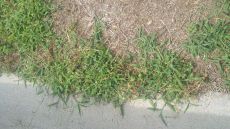
Crabgrass - is an annual summer grassy weed that is one of the worst pests in lawns for our area. A yearly pre-emergent can be applied to help prevent crabgrass, however timing of the application is vital. Pre-emergents do not last forever. These treatments degrade after a certain length of time because of two common factors from Mother Nature: sunlight and rainfall. These elements will break down the barrier created by the pre-emergent and leave your lawn susceptible again. Crabgrass has four life stages to its life-cycle. It is easiest to kill when in the first and last stages of the plants life. There are post-emergent herbicides to spray on crabgrass during the summer months. However, the best defense to prevent crabgrass and all other weeds is........DENSE, HEALTHY TURF!!!!!


Dallis Grass - is a perennial summer grassy weed. Most homeowners confuse dallis and crabgrass. They are different however and are treated differently. Pre-emergent can also work to help prevent dallis grass but as with crabgrass, if you don't have a dense healthy root structure on your turf, it will invade your lawn. Dallis grass has very dense grass blades and grows tall, whereas crabgrass typically stays lower to the ground. Unlike crabgrass, there are no post emergent herbicides for dallis grass. The best plan of attack is to spray the dallis grass with roundup in late summer and re-seed fescue in those areas to increase fescue density.


Top:  Crabgrass; Bottom - Dallis Grass
Nutsedge - is a perennial weed that grows in the summer time. It is very easy to identify as it grows much taller and faster than any other weeds around. It is the only weed that is three sided when rolled in your fingertips. Nutsedge has a bright neon green color to it. It has tubers (or nutlets) in the soil that are hard to eradicate. It grows on rhizomes, which are roots that run underneath the soil like a vine. Nutsedge prefers to grow in hot, wetter areas of the lawn. There is an herbicide that will kill the stalk of the nutsedge but will not kill the tubers. That means it can re-grow in the same spot. Our herbicide will eliminate 40-60% of the nutsedge weeds and suppress the rest.

I hope this information and the pictures are helpful. We're always more effective in handling issues if we know what we are dealing with. This does not come close to touching all the summer weeds in fescue lawns, however these are the most common and problematic weeds we encounter in our area during the summer. As a reminder we do offer a flea, ant, and tick application for summer time to rid your lawn of pests that can cause issues for kids and dogs. To receive a free analysis or to sign up for service, call our office at 704-821-0708 or visit our website at:
www.aatexlawn.com

Thanks,

The AA Tex Lawn Team

Thursday, June 2, 2011

Your Lawn, the Unsung Hero


A beautiful lawn is something which most of would love to have. What's more relaxing than walking barefoot across the grass or laying a blanket out for a picnic on the soft grass (or a nice nap), or letting the kids play in with the sprinkler without creating mud puddles in the backyard and tracking mud through the house! Yes, there are many reasons to want a lush turf around your house. Most of us don't realize the environmental benefits of grass, though. Here are several lesser known benefits to grass.
Water Quality
  • Grasses trap the rainwater to keep runoff from washing away valuable soil. It stops erosion and also keeps the soil for running into storm drains.
  • As an additional benefit, microorganisms that live in the topsoil and thatch of your turf break down impurities. They basically act as a water filter in our lawn to reduce pollution by purifying the water as it passes through the turf's root zone.
Air Quality
  • Turfgrasses produce oxygen and absorb carbon dioxide emissions, thereby helping to give us the air we need to live. 2,500 square feet of turf (that's just 0.06 of an acre) absorbs enough carbon dioxide and produces enough oxygen for a family of four to breathe.
  • They also reduce heat in urban areas where the heat from the sun bounces off concrete and asphalt raising the temperatures. This is called the "heat island effect". The Lawn Institute's website tells us that "On a hot summer day, lawns will be 30 degrees cooler than asphalt and 14 degrees cooler than bare soil." That's significant!
  • Lawns trap and remove dust and dirt from the air. Removing these pollutants improves the air we breathe.


So not only will a beautiful landscape increase curb appeal and add as much as 15% to the value of your home, it will help our environment and improve the world we live in. AA Tex Lawn has a variety of services for your turf. To Unlock Your Lawn's Potential, call our office at 704-821-0708 or see our website at www.aatexlawn.com.


Resources:
http://www.landcarenetwork.org/legislative/watertext.pdf
http://www.thelawninstitute.org/environment/?c=184513

Wednesday, May 25, 2011

Grubs!

June beetle larvae (grub)
If you are like me, grubs are not something you want to think about.  Let’s face it…  They are not going to win any cuddly animal contests.  You may think they are harmless, after all, they don’t bite like fire ants or sting like bees.  However grubs can do serious damage to your turf.  What are they and how do you know if you have a grub infestation? 

Grubs are the larvae of beetles.  If you had Japanese beetles in your yard last year, chances are they have laid eggs in your lawn.  These eggs grow to be larvae (or grubs) which eat the grass.  Grubs are a sub-surface feeding insect, meaning that they feed below the ground as opposed to a surface feeding insect like an army worm. Knowing the life cycle of a grub is the most important part of understanding grubs. There are six different types of beetles that are most commonly found in our area and they all have different types of grubs. For the most part, though, they have the same lifecycle.


Grubs will feed a little bit in the late spring before turning into their adult stage beetle. Typically you see most grub damage in the months of September and October. Putting down an insecticide at the right time can help reduce damage to your lawn from the beetles. The most common beetle we encounter is the Japanese beetle. As you probably know, Japanese beetles will attack your shrubs in June. If you have a nice lawn and notice a lot of Japanese beetles in your plants this summer, there is a good chance you could have an infestation of grubs. Beetles will lay their eggs in thick healthy lawns so that they can properly feed before burrowing deep in the soil for the winter.

We apply an insecticide that would be both a curative (kills active) and a preventative. It works by killing all active grubs in the lawn as well as create a barrier below the surface that would kill the larvae before they are able to surface and feed on your lawn. Over time, continued applications for grubs will help to control the beetle population on your lawn. This is beneficial not only for your lawn, but your shrubs as well. 

Grub Damage in Lawn

To receive a free analysis or to sign up for service call our office at 704-821-0708 or visit our website at:  www.aatexlawn.com

Thanks,

The AA Tex Lawn Team

Monday, May 16, 2011

Planting Annual Flower Beds


With the return of warmer weather, many of us are out in the yard, sprucing up our landscapes, creating beautiful surroundings to enjoy as we spend time outside with our neighbors, family, and friends. Planting annual flowers are one way to continue that jolt of color that we see in the early spring from the beautiful yellow forsythias and colorful tulips that announce the arrival of spring. When planting annual flower beds, there are some things to keep in mind.
  1. Plan before you plant… When picking the flowers for your bed, do the research to find out the plants' sunlight and water needs. If you put a shade-loving plant in a sunny spot, or a sun-loving plant in a shady spot, you will end up with a flower that is struggling to survive.
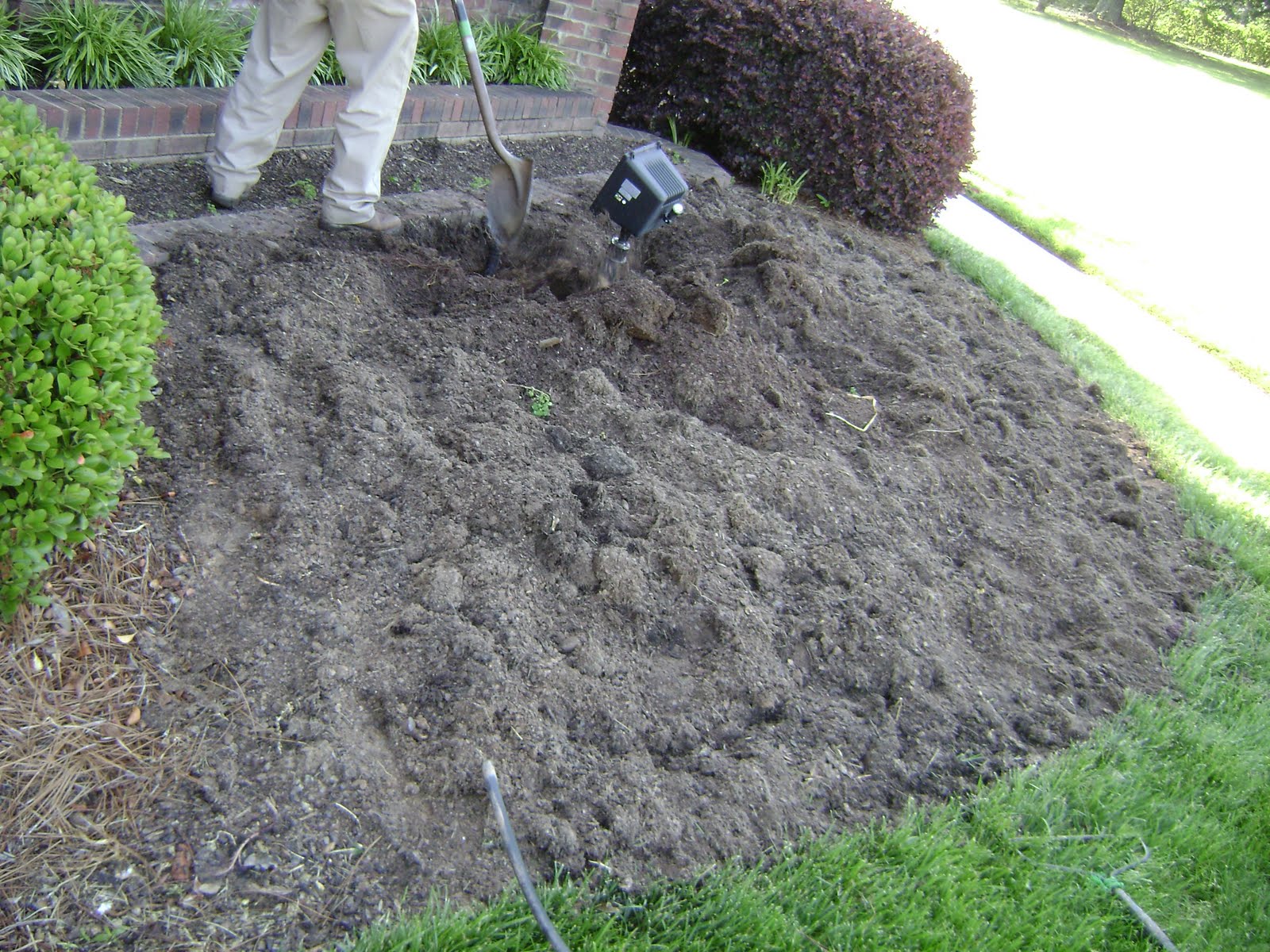
  2. Proper soil preparation is key. In our area, we have heavy clay soil which holds water and is very dense. It makes it hard for roots to penetrate. (I pity the roots. I almost threw my back out trying to dig a hole in my backyard. It's like digging through concrete!) It is best to till and amend the planting bed with soil conditioner that contains pine bark fines or compost before starting. At AA Tex Lawn, we shy away from using potting mixes that contain peat. While peat loosens the soil, it also holds water and decomposes quickly. Since clay soil holds water naturally, amending with something that retains water can lead to your flowers getting too much water. Secondly, peat is not a sustainable resource. Since peat beds take thousands of years to form, it is not possible to renew them as quickly as we use them. That is why we try to stick to soil conditioners that contain pine bark fines. You should be able to find these at your local retail store. Raising the bed 2 to 3 inches will also help with drainage. 
  3. As a homeowner, I know sometimes we don't have the time, resources, and equipment to spend on bed prep before we begin the planting process. Keep in mind, though that beginning with the right soil conditions can make all the difference in how the flowers prosper. But, what if you don't own or want to rent a tiller? Or don't have the energy to turn the soil of the bed with a shovel? Even if you don't till and amend the whole bed before planting, be sure to incorporate a compost or soil conditioner equally with the soil from the hole you've dug. It will provide a softer soil to encourage root growth as well as help with drainage. Depending on the type of plants you are installing, you may also want to add other amendments to customize the soil for the plants' particular needs.
  4. Fertilize your beds at installation with a long lasting, slow release fertilizer to provide nutrients throughout the growing season. For most annual beds, it is OK to use a good, balanced fertilizer with similar numbers such as a 14-14-14 N-P-K ratio. Your local retail store may sell fertilizers or potting mix/fertilizer combinations that are optimized for a particular plant type. (i.e. orchids, African violets, etc.)
  5. As for spacing, follow the instructions on the tag that came with your plants to leave room for mature plant size. Each distinct variety within a species may grow to a different height and width.
  6. Water in your new plants thoroughly. This serves several purposes. It settles any air pockets left in the soil after the planting; be sure to backfill any settling that occurs with additional soil or conditioner mix. Watering enough to soak the roots also helps alleviate the stress the plant goes under when moving to a new location. Water regularly (every couple of days) for the first couple of weeks.
  7. When done, mulch around the flowers with soil conditioner or the smallest pine bark you can find. These natural, organic mulches will renew the soil as they decompose and give your bed a head start for the next planting.
With the right conditions and water, the plants in your bed should thrive and bloom beautifully for you all summer long. For more information on annual flower beds or if you want our help in installing them, give us a call at our office at 704-821-0708 or visit http://www.aatexlawn.com/.

Thanks,
The AA Tex Lawn Team

Friday, May 6, 2011

A Tough Year for Fescue

One interesting thing about the turf maintenance industry is that no 2 years are alike.
2010 was a very difficult year for fescue turf. Last year, the Charlotte area received over 80 days with temperatures above 90 degrees. Fescue is a cool season turf that thrives for about 8 to 9 months a year. June, July, and August are extremely stressful for fescue in a normal weather year. When the temperature hits 90 degrees, fescue will go into dormancy. The return of cooler temperatures revives the fescue and allows it to put on new growth. With the prolonged heat last summer, the fescue that went dormant suffered mass root loss and did not recover. Because of this we lost a good percentage of the turf that would have normally come back with the cooler temperatures.

Overseeding normally allows us to repopulate the turf in bare areas caused by heat stress. However, once we did the fall overseeding in 2010, the weather threw us another curve-ball. We basically went from the extreme heat, had 1 month of normal temperatures, and then went straight to below normal temperatures. This short window of opportunity did not give the seed enough time to fully germinate and develop. With this scenario a certain percentage of the seed either did not germinate or did not survive. That is some of the reason for the bare areas that we are left with now in many landscapes.

If there are bare areas, weeds have room to flourish. We've seen an abundance of weeds this year as a result. The good news is that when used in conjunction, pre-emergent and post emergent sprays can eliminate most weeds. Spraying for weeds is a service we provide to the majority of our maintenance clients. (Check your contract if you are unsure if we provide you with this service.) If you have questions about your lawn, please call our office and we're happy to help or set up a free analysis.

Thanks,

The AA Tex Lawn Team